Blog
Dental hygiene tips for healthy teeth & gums
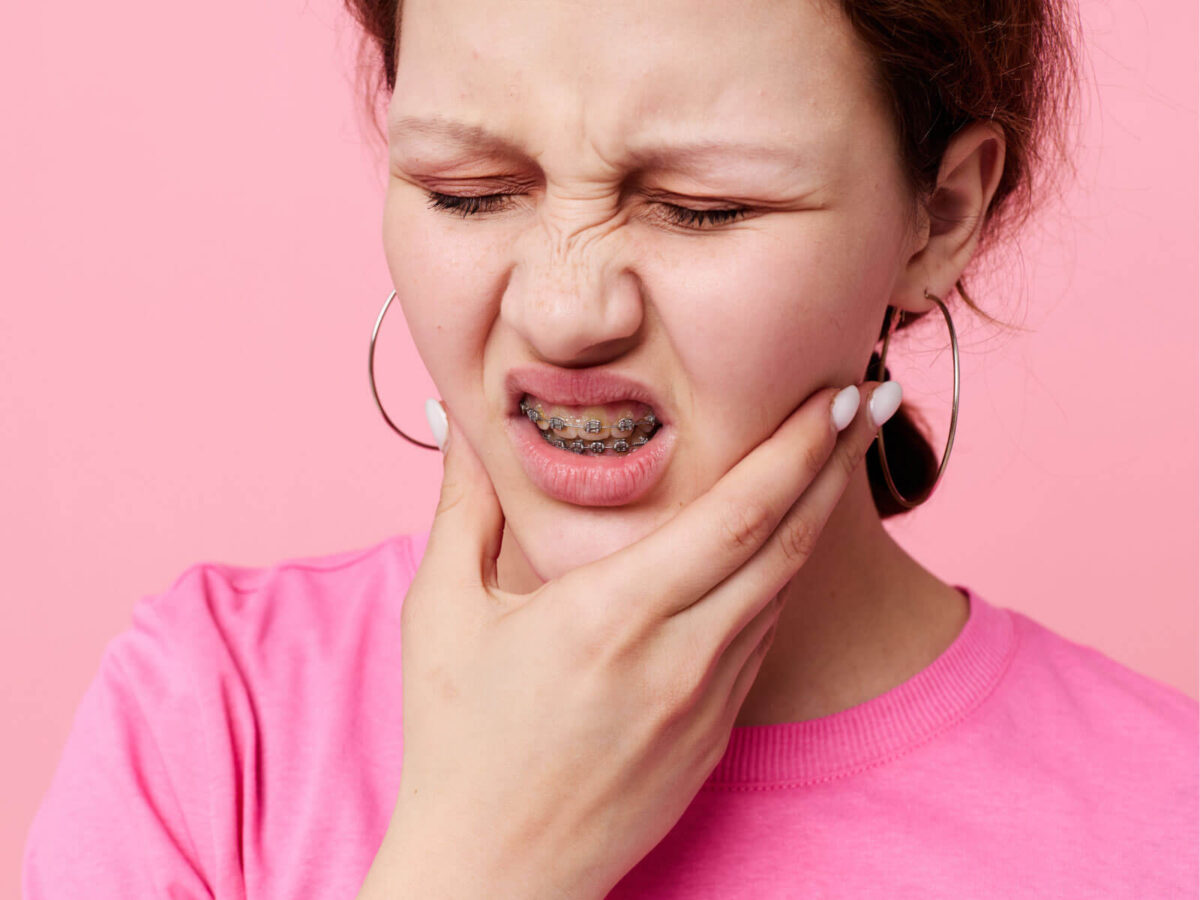
Do Braces Hurt? What to Expect & How to Ease the Pain
Do braces hurt? The appointment itself, barely. That’s an hour of sitting with your mouth propped open while someone glues brackets on one at a time, and the whole thing is more boring than painful.
What gets you is the evening. The wire has been pulling for six or seven hours by then, and every tooth in your head has an opinion about it. Nothing sharp, more like a deep ache that arrives all at once.
A friend of mine got hers on at nineteen and spent the afternoon telling people it was nothing. She texted me around dinner to say she couldn’t bite into bread.
TL;DR
The pain shows up hours after the appointment, not during it, and peaks somewhere in the middle of day two.
The worst of it clears inside a week. Cheek and lip irritation from the brackets outlasts that, running until the soft tissue toughens up.
Every adjustment restarts the same cycle at lower volume. Milder each time, from what I’ve heard, though the first one after a long gap can catch people out.
Cold food and soft food do most of the work. Add wax, saltwater, and whatever painkiller you’d normally take. Sharp pain still there after ten days means a phone call.
What Does It Feel Like When Braces First Go On
Pressure, mostly. Nothing sharp or nerve-deep like a cavity gives you. Your teeth feel tender under any real bite, the gums around each new bracket feel bruised, and anything firmer than pasta becomes a project.
Then there’s the second problem, which is the metal itself. Brackets and wire ends sit against the inside of your cheeks and lips, and that tissue has never had to deal with anything like it.
Small ulcers along the cheek line in the first week are normal. My friend had three of them at once and thought something had gone wrong. Nothing had. That tissue toughens up, and by month two most people stop noticing the brackets are there.
Why Do Braces Hurt in the First Place
Each tooth sits in its socket held by small ligaments, and the wire pulls hard enough to stretch them. AAO describes the resulting soreness as similar to how you feel after a workout, which is the closest comparison I’ve heard anyone make.
Underneath that, bone is being rebuilt. It breaks down on the side the tooth is moving toward and builds back up behind it, and your body treats that like any other inflamed tissue.
Adjustments restart the whole thing. The archwire gets tightened or swapped, pressure reapplies, and the ache comes back for a couple of days. Nobody enjoys that, but a month with no soreness at all usually means nothing much is moving.
How Long Do Braces Hurt
Three to five days covers the worst of it for most people, and the pattern is well documented. A 2002 study tracking 55 teenagers through separator placement found 87% in pain that first evening, with intensity peaking the following day.
The figure that catches people out is the last one. At day seven, 42% were still reporting pain. Separators aren’t the same as getting brackets bonded, but the shape of the curve is what matters here, and it has a long tail.
Cheek and lip irritation runs on its own clock. That tissue needs a week or two before it stops reacting to metal sitting against it, which is roughly when my friend said she stopped thinking about her mouth constantly.
How Long Do Braces Hurt After Each Adjustment
Every visit where the wire gets changed restarts the clock on a smaller scale. You’ll feel it by that evening, worst on day two, and by the weekend it’s usually gone.
Nothing hits like the first week did, though. After that, the teeth have covered most of the ground, and the wire changes get finer, though my friend said her fourth adjustment caught her out because she’d stopped expecting it.
This is also where fixed braces and aligners part company. An observational study of 160 patients found pain in 91.4% of the fixed appliance group, with 95.2% reaching for painkillers, both higher than the aligner group.
Not Sure What You’re Feeling Is Normal?
Get your pain checked by an orthodontist and find out what’s causing it.
How to Relieve Braces Pain at Home
Most braces pain relief tips are things already in your kitchen.
Cold, in almost any form. Yogurt out of the fridge works. So does an ice pack held against the outside of your jaw, or just drinking water colder than you normally would. The cold narrows blood vessels around the sore area and takes the edge off.
Soft food for the first two days. AAO’s list is mashed potatoes, smoothies, yogurt, soups, and scrambled eggs, all of which ask nothing of your teeth. Cutting things smaller helps more than people expect, even when the thing is already soft.
Painkillers, but ask first. AAO lists ibuprofen and acetaminophen as options. Cleveland Clinic advises against ibuprofen and other NSAIDs during treatment, on the grounds that they can interfere with tooth movement, so it’s worth a question at your next visit.
Orthodontic wax. Most people are handed a case of it at the placement appointment and never open it. Pinch a piece, warm it between your fingers, press it over whatever is rubbing.
Warm salt water. Cheap, unglamorous, and the thing orthodontists keep recommending anyway. Half a teaspoon dissolved in warm water does nothing for the deep ache, but sore gums calm down and any ulcers along the cheek line close over faster.
What Should You Avoid in the First Few Days
Anything you’d have to bite into. Crusty bread and raw carrots are the ones people forget, and popcorn earns its reputation for other reasons entirely. A firm bite puts your whole jaw behind teeth that are already tender.
Temperature matters for the first day or two more than people expect, so hot coffee and soup are worth cooling off. Numbing gels help some people, though follow the packet rather than reapplying every hour.
The one I’d avoid entirely is taking clippers to a full archwire because it’s poking you. A small loose fragment is different, and your orthodontist can tell you what’s safe to remove yourself, but cutting a wire that’s still doing its job tends to end in an appointment anyway.
When Is Braces Pain a Sign of Something Else
Normal soreness fades on a schedule, which makes the exceptions easy to spot. Anything still going strong at day ten is worth a phone call, and so is one tooth aching sharply while the rest of your mouth feels fine.
Hardware problems are their own category. A bracket that’s come loose, a wire out of its slot, an end that’s cut into your cheek. None of those get better on their own, and leaving them tends to turn a bad week into a longer one.
FAQ
Does getting braces put on hurt?
No. The appointment is long and dull, not painful. It’s the evening you want to plan around.
How long does the pain last after tightening?
A day or three, worst on day two. Nothing after the first round has been as bad, from what I’ve heard.
What helps fastest?
Cold. Whatever form is nearest, whether that’s water, yogurt, or an ice pack against your jaw.
Do clear aligners hurt less?
Research says yes. One study of 160 patients found 91.4% of fixed appliance patients reported pain, well ahead of the aligner group.
Why does one tooth hurt more with braces?
Usually because that tooth has the furthest to go. Sharp pain in one spot that doesn’t let up is worth reporting.
Conclusion
Braces hurt in a narrow window, and the rest of treatment is quieter than people expect. First few days after placement, a day or two after each adjustment, and between those visits, most people stop noticing the hardware entirely.
My friend with the bread was eating normally by day four. She still calls that first night the worst part of two years in braces, which says something about the other 729.
If something isn’t fading on the schedule, everything else follows; that’s the version worth asking about. One appointment tells you whether it’s the treatment doing its job or a bracket that’s come loose.
Ready to Get Comfortable Again?
Have your braces checked and your pain sorted by a specialist.