Blog
Dental hygiene tips for healthy teeth & gums
How Long Do You Have to Wear Braces? Treatment Timeline
Why Do People Ask How Long Do You Have To Wear Braces
For many patients, the first concern about braces is time. People naturally wonder how long they might be wearing them. Brackets and wires can feel like a major step, especially when the treatment length is uncertain. While a clear answer would be ideal, orthodontic care usually depends on several individual factors.
The timeline is rarely identical for two patients. How long do you have to wear braces depends on several personal factors. Tooth alignment matters. Bite structure matters as well. Even small daily habits can influence how quickly teeth begin to shift during treatment. Some patients finish in a little over a year. Others discover that how long you need to wear braces may be closer to two years or slightly longer to achieve stable results.
What Is The Typical Braces Treatment Timeline
Orthodontic treatment moves at a careful pace. There is a reason for that. Teeth do not move instantly. The bone and nearby tissues must adjust as their position changes. For this reason, orthodontists use gentle pressure over time. Small adjustments. Over time, the teeth slowly shift toward better alignment.
Many patients spend close to 18 to 24 months in braces. It is a common estimate, though not a fixed rule. The American Association of Orthodontists explains that treatment time can change from one patient to another. The difficulty of the alignment problem matters. So does how consistently patients follow orthodontic instructions.
Even with that general range, treatment is rarely identical for two people. Each case develops a little differently.
What Factors Influence How Long You Need To Wear Braces
Orthodontists evaluate several factors before estimating “how long do you need to wear braces”. One of the most important considerations is the severity of tooth misalignment. Mild crowding can sometimes be corrected relatively quickly.
Some orthodontic problems are more complex than others. Some bite problems take more attention. Overbites and underbites are common examples. Multiple teeth may need to shift. The way the upper and lower jaws meet may also need adjustment.
How Age Can Affect Orthodontic Treatment Time
A patient’s age can sometimes affect how orthodontic treatment progresses. In younger patients, the bones supporting the teeth are still developing. That ongoing growth can make tooth movement a little easier during treatment.
Many orthodontists recommend early evaluations for children and teenagers. The goal is simple. It gives them the opportunity to observe how the teeth and bite are developing and to catch alignment concerns at an earlier stage.
Adults can still see excellent results with braces. Many people begin orthodontic treatment long after their teenage years. The movement may simply take a little longer. Adult bones are denser. Jaw development is already complete in adults. Because of this, treatment may take slightly longer. Even so, orthodontic results are usually very successful.
What The Early Phase Of Braces Looks Like
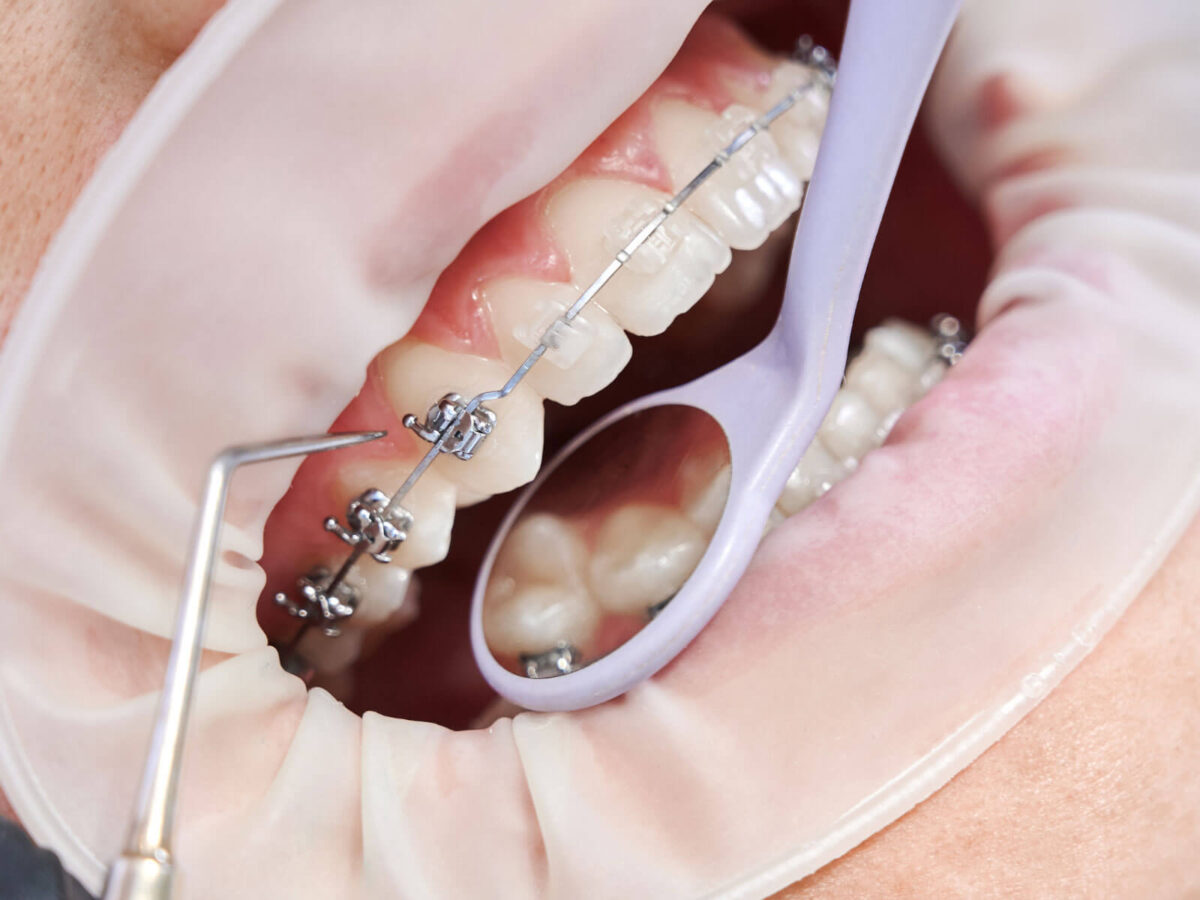
The early phase of braces treatment usually focuses on alignment. Brackets are placed on the teeth, and a thin archwire connects them across the smile. The wire begins applying light pressure. It does not move teeth instantly. Teeth move slowly while gentle pressure guides them into better positions.
In the first few months, changes tend to appear slowly. Teeth that once appeared crowded may begin moving slightly apart. Areas where teeth overlapped often start to straighten. Progress tends to happen little by little. For that reason, patients usually see the orthodontist about every two months so small adjustments can be made along the way.
What Changes During The Middle Stage Of Braces
When the teeth begin straightening, orthodontists also evaluate the bite. The way the upper and lower teeth meet influences more than the look of a smile. It plays an important role in biting and overall oral health.
Rubber bands or other orthodontic appliances may be used during this stage of treatment. They may seem minor at first. They may seem simple, yet they serve a clear function. They guide the teeth and jaw as the bite slowly improves.
When Braces Treatment Nears Completion
Later in treatment, progress begins to feel a little different. By this stage, most of the larger tooth movements are already finished. What remains are smaller adjustments that refine the final alignment.
Orthodontists keep adjusting the braces during this stage. Teeth continue moving slowly over time. Early changes can be hard to notice.
Near the end of treatment, the orthodontist reviews the patient’s bite. They look at how the upper and lower teeth come together when the mouth closes naturally. Comfort matters here. Balance too. Once the alignment looks correct, the braces can come off.
Why Retainers Matter After Braces
Many patients assume orthodontic treatment ends once braces come off. In reality, the retention phase is just as important as the treatment itself. Teeth naturally try to return to their previous positions.
Retainers hold the teeth in place after the braces are removed. The bone also takes time to adjust. It does not happen overnight. The American Association of Orthodontists advises the use of retainers. Without them, the teeth will slowly move back.
How Patient Habits Affect Treatment Duration
Orthodontists design the treatment plan. The timeline, however, often comes down to the patient. Daily habits make a difference.
Sometimes a bracket breaks. Sometimes an appointment gets missed. Rubber bands may not always be worn as instructed. When that happens, progress can slow. Patients who follow instructions closely usually finish treatment closer to the expected timeline.
Why Braces Timelines Differ
Bracing timelines can differ from patient to patient. Mild alignment problems often take less time to correct.
A small gap may close relatively quickly. Minor spacing issues can respond faster too. Crowding is another situation. Bite or jaw alignment problems often require slower adjustments. Orthodontists guide the teeth carefully to maintain balance.
FAQs
How long do braces usually stay on?
Braces often remain for around two years. Some finish sooner. Others need more time. The timeline usually depends on the type of correction needed.
Can small spacing issues be corrected quickly?
Mild crowding is often easier to treat. A few patients may finish in roughly a year. Others take longer because every case is different.
Do braces take longer for some age groups?
No. Not always. Treatment for adults can sometimes move more gradually because the bones have finished developing. Still, orthodontic treatment works well for adults.
Can treatment time be reduced?
The process is designed to move teeth gradually. Rushing it is not safe. Patients who follow instructions closely often stay closer to the expected schedule.
Conclusion
Orthodontic treatment takes time. Patience matters too. Many people ask how long do you have to wear braces and hope for a simple answer. The reality is different. The timeline usually depends on each patient’s dental needs.
Understanding how long do you need to wear braces also means looking at what affects treatment. Alignment problems play a role. Bite correction does as well. Patient cooperation matters too. In the end, the goal is not speed but a healthy, stable smile.
In case you have been thinking of braces or asking yourself how long do you need to wear braces, then you would want an orthodontic appointment as the most effective first step.
An orthodontist is able to examine your teeth and inform you of the treatment process and give you a customized schedule depending on your needs. Premature analysis and correct treatment will contribute to the achievement of the best outcomes and a long-lasting, confident smile.